The content of this article was reprinted with the permission of Teatown Lake Reservation. Teatown is a 1000-acre nature preserve and education center located in the Lower Hudson Valley, whose mission is to inspire their community to lifelong environmental stewardship. They are located at 1600 Spring Valley Rd., Ossining, NY 10562. The Preserve & Hiking Trails Teatown manages a 1,000-acre preserve (the largest community-supported preserve in Westchester County). 15 miles of trails are open to the public from dawn til dusk, 365 days a year. The preserve also includes Wildflower Island, a 2-acre wildflower sanctuary. Education 20,000+ individuals are impacted by their environmental education programs each year. Education efforts include a wide range of classes, lectures, and outdoor activities, on-and offsite, for students, families, adults, and under-resourced communities, all focused on nature and the role of stewardship in preserving biodiversity. Science & Stewardship The mission of their science and stewardship efforts is to preserve the region’s biodiversity. They tackle local and regional conservation issues through habitat protection and restoration, wildlife management, research and monitoring, and regional collaboration. Regional Collaboration Teatown works with several regional partnerships including the Environmental Monitoring and Management Alliance, the Lower Hudson Partnership for Regional Invasive Species
Read more →In lieu of the typical New York State Conference on the Environment held annually each fall, for 2019 NYSACC teamed up with the New York State Department of Environmental Conservation (DEC) to host a one-day DEC Informational Conference at DEC headquarters in Albany on October 25, 2019. Check out this fantastic recap of the conference, including links to presentations.
Read more →Peter A. Young, Chairman of the Town of Southold Conservation Advisory Council in Suffolk County was elected to the NYSAAC Board at our New York State Department of Environmental Conservation Conference in Albany on October 25, 2019. Peter has retired from careers in corporate real estate and military service. He is a graduate of Fordham University (BS) and the University of California, Berkeley, (MBA). He has served as a member of the Putnam County Soil and Water Conservation District, the Town of Philipstown Wetlands Advisory Committee, Chairman of the Philipstown Planning Board and as the Putnam County representative to the Hudson Valley Greenway Council before relocating to a family home in the hamlet of Mattituck. He is a member of the U.S. Coast Guard Auxiliary, the Peconic Bay Power Squadron (Senior Navigator) and a New York State Boating Instructor. Welcome aboard, Peter!
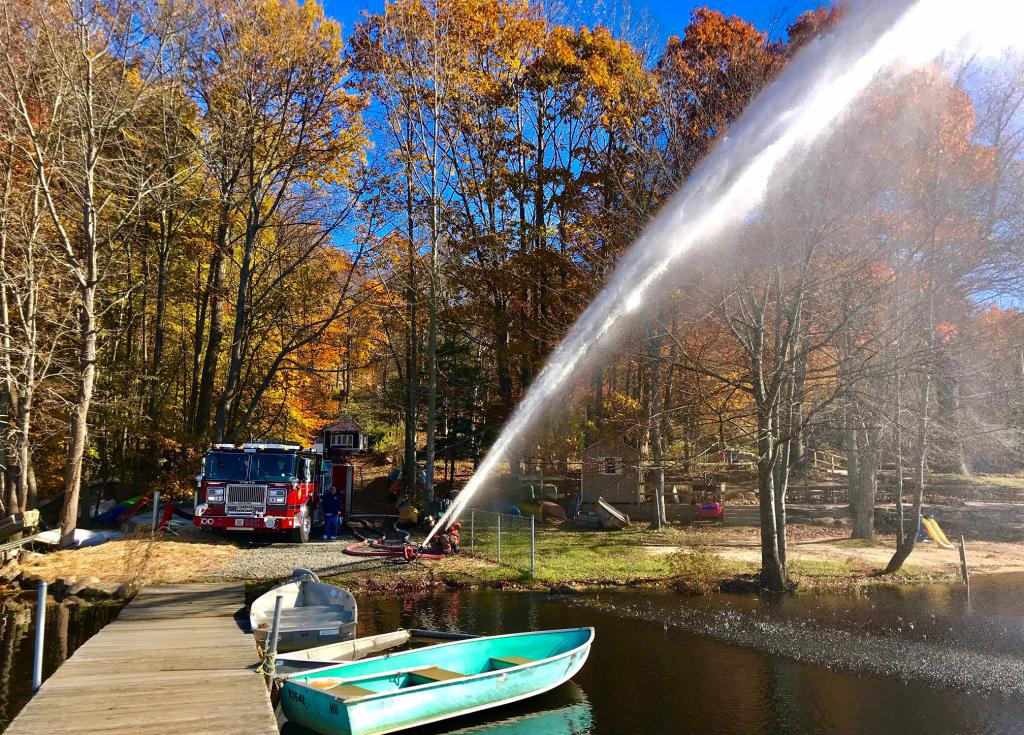
Read more →Ask NYSACC is a new feature in which NYSACC fields reader questions on a variety of topics. We seek expert responses to your questions from environmental professionals. If you have a question, please email NYSACC’ President at SimonSkolnik@gmail.com. Question #1 I have observed fire trucks filling up at dry standpipes at various lakes and other water sources around my town and then discharging that water elsewhere, either at a scene or in training. Usually at a scene this is less of an issue if the water is being discharged to a structure or field, but that can still get to a nearby waterway. For training they usually just discharge right back into the lake they are standing at. Sometimes that discharge flows directly into another lake. We have begun to see invasive plant species (e.g., water chestnut) and possibly animal species (e.g., zebra mussels) showing up in lakes which are disconnected from other contamination sources and the only consistent, potential source we can identify is fire trucks emptying their water trucks. For example, at a local park, the lake there is invested with water chestnut. This was brought to the attention of our local PRISM in 2018. The PRISM investigated and
Read more →